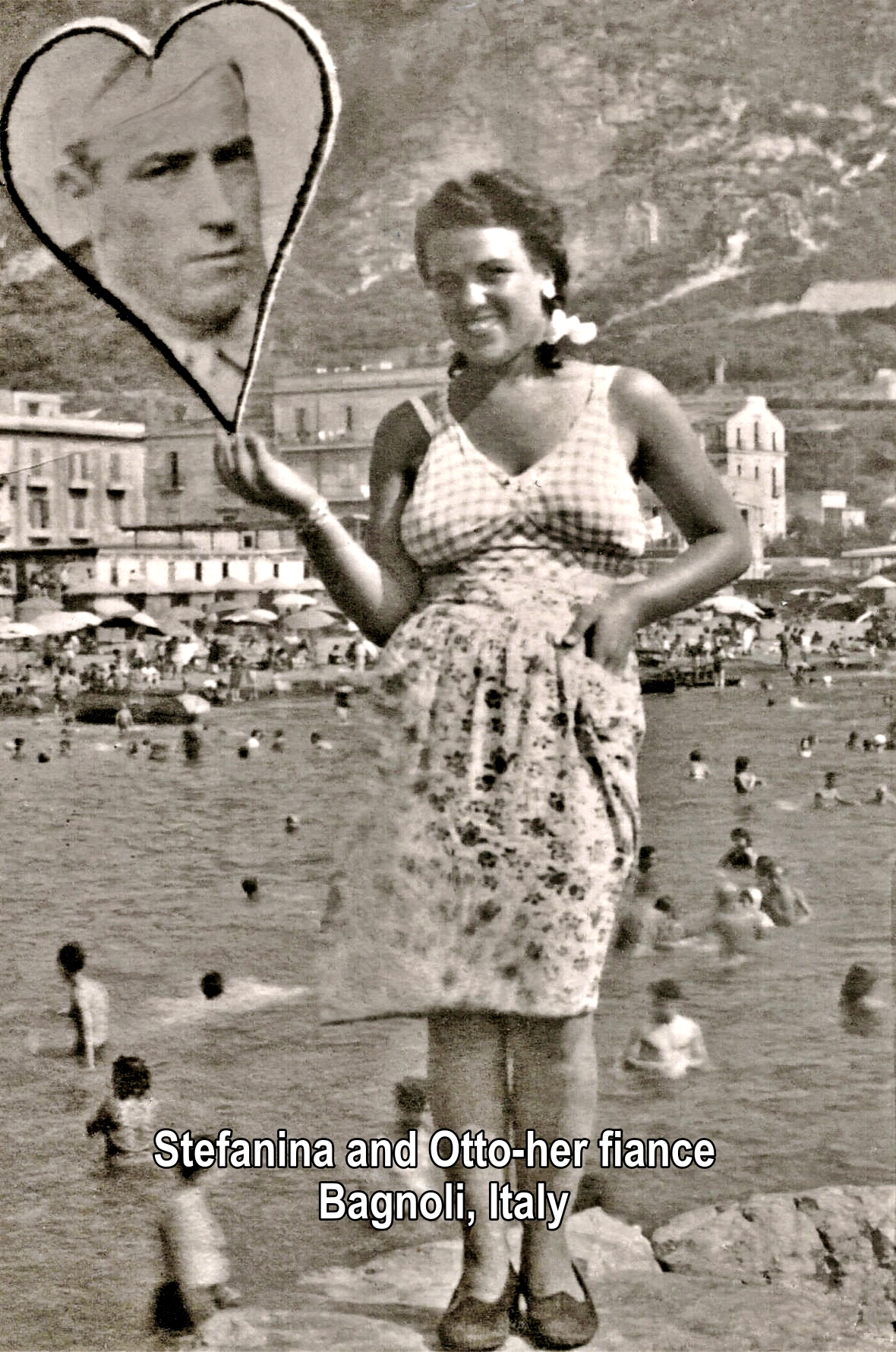

My mother, born in Italy in 1928, grew up running helter-skelter in the battle-scarred streets of Bagnoli, a suburb of Naples and the focus of a blitzkrieg during World War II. After her 86th birthday, I wrote down her reflections. Playing dodge-the-bomb shaped her life, her values, and her thinking until she died at the age of 92 in 2020.
In her thick accent sustained by a lifelong hearing impairment my mother, Stefanina, said, “I was in the big-uh war-the second war. I never thought I would survive and getta old.” In fact, there were about 20,oo0 civilian casualties in Naples from military action of allied and axis forces.
“A thousand may fall at your side, ten thousand at your right hand, but it will not come near you.” (Psalm 91:7 NRSV)
Mom, the fifth of eight children, judged the importance of problems she faced throughout her life by comparing them to her experiences growing up under fascism and a war. Her father, a sea plane pilot, died before her seventh birthday. They had been living in a place provided by his job. When he passed, they became homeless.
A friend of her mother found a cave for them to use as a temporary dwelling. One night it rained nonstop and a sudden surge of water flooded it. The torrent swept away a loaf of bread and mom’s baby brother, Salvatore. David, their half-starved eight-year-old brother, didn’t know whether to save him or the bread. He saved Sal.
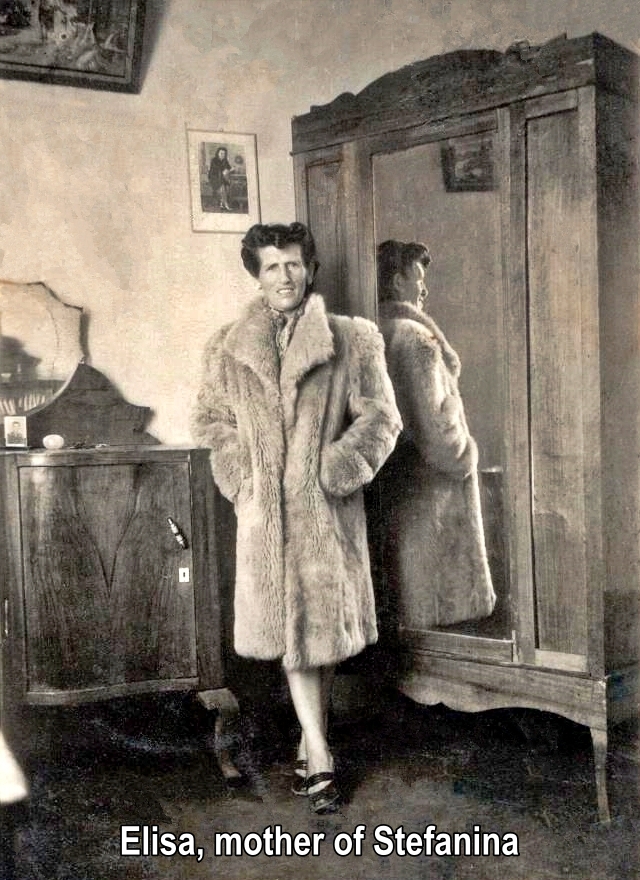

A Catholic convent took in Mom and two of her younger siblings. Her brother and sister liked it there-she didn’t. Her hands flogged the air as she spat out her words like tainted food. “The nuns make-uh me work all the time and they no let me go to school!” The convent staff cared for them for five years.
“God is our refuge and strength, a very present help in trouble.” (Psalm 46:1 NRSV)
When the war started in 1939 and food supplies diminished, the convent returned the three siblings to their family. They had moved out of the cave and Mom seemed pleased with the new arrangements. “Our apartment had one bedroom. We sleep anywhere we want on the floor.”
When discussing food shortages, she erupted like Mount Vesuvius. “I was in the war! We never throw away food! My brothers-they would go fishing and trade extra fish for bread. Seaweed-we heat it up. Dandelions-we cook(ed) like you cook spinach. Octopus-we eat with sauce. When we no could get chicken, my mother kill-uh rabbits and cook them.”
Her mother, my grandmother, took in laundry to earn money, but couldn’t buy bread, flour, or beef with it. She used gold jewelry to barter for certain foods from the black market. When they received bread rations, Grandma gave more to her older children who worked.
“The field of the poor may yield much food, but it is swept away through injustice.” (Proverbs 13:23 NRSV)
Sometimes Mom followed people who were eating and scavenged scraps that dropped to the ground. When she swam in the sea, she’d pluck oysters from rocks to bring home for her family to eat. Her older siblings cooked because they couldn’t risk the younger ones ruining the food.
As Mom wandered the streets with her growling gut, she saw houses with families inside being destroyed. She saw buildings collapse one after another as bombs exploded like unleashed fireworks. She saw her school turn to rubble and her hopes to get more of an education dashed. Somehow, she learned to read and do basic math while she honed her survival skills.
Mom flash backed to when she dodged death from low flying aircraft using automatic weapons. “How many times the plane would come down and shoot at me! Wow!” Her eyes widened as if she were witnessing the four horsemen of the apocalypse rip through the fabric of the universe.
“When the alarm go off, like a cat I run [sic] to the shelter. One time that was wrong! A man was run(ning) behind me. He threw me in the ditch. Almost I gotta killed!”
“Though I walk in the midst of dangers, you guard my life where my enemies rage. You stretch out your hand; your right hand saves me.” (Psalm 138:7 NAB)
Seeking safety, Mom often went swimming in the Tyrrhenian Sea. Bombs didn’t usually explode in the water and there were no mines there. To protect their food supply from hungry soldiers, her brothers loaded it onto their fishing boat and anchored it in the sea. A bomb sunk it. They were devastated.
Mom didn’t have much during those war-torn years, not even shoes. She buried them in the sand to go for a swim and someone stole them. When the air-raid siren’s spine-chilling wail warned of aerial strikes, she’d race to a shelter (a network of underground tunnels and caves) to protect what she did have-her life.
She said, “The pain I was have was that I no want to die. I was too young to die.”
“The LORD will keep you from all evil; he will keep your life.” (Psalm 121:7 NRSV)
And she was too young to grapple with German and American soldiers who came to her apartment building looking for girls. The children who played nearby, when asked, would point upstairs to where my mother and her three sisters lived. Henry, their oldest brother, would stand by the door windmilling a long thick stick ready to rain blows on anyone who forced it open.


Only Satan could have choreographed the atrocities Mom witnessed.
She watched an Italian soldier raise his gun to shoot her hearing-impaired mother when he ordered her to halt and she didn’t. Struck dumb with terror, Mom couldn’t scream, couldn’t move, and couldn’t help. Another soldier, who noticed her mother appeared deaf, stopped him.
She warned an American soldier not to walk on a certain part of the beach. His squad leader told him the land mines were cleared. The soldier turned to smile at my mother but kept walking. Horrified, she screamed, “No walk there!”
Then Mom said, “Boy-he blow up in pieces. See, I would go to the beach all the time, but I would always walk on the same place.”
She spoke of savagery. “I saw this drunk teenage boy walk [sic] on the beach. He touch-uh the knife (bayonet) on the belt of a German soldier. The soldier take-uh the knife and hit him in the middle of his head. He jump like the chicken with the head cut off. That was terrible!”
“Beloved, never avenge yourselves, but leave room for the wrath of God, for it is written, ‘Vengeance is mine, I will repay, says the Lord.’” (Romans 12:19 NRSV)
Tragedy struck the family when an American soldier driving a jeep hit Salvatore, the brother who almost got carried away by flood waters. He had a traumatic head injury but survived. Sal died at the age of 29 from a brain tumor the family attributed to that incident almost two decades earlier.

Near the end of the war, my father, who worked in the army’s bakery in Naples, became smitten with my mother’s oldest sister. But she spurned him. Instead, Mom began a relationship with my father, Otto, a man 18 years older than her. Dad arranged for Mom to emigrate from Italy to the United States aboard the Italian ocean liner Vulcania in December of 1947.


“I just marry [sic] him so I could come to the United States to eat,” she told me. That may be so, but she had someone help her write love notes on the back of pictures she mailed to him.
Despite what quickly became an explosive relationship, my brother, Mike, and I came along. Dad, a Kentucky native, worked swing shifts at a steel mill in Northeast Ohio to provide for his new family.
Mom had serious emotional scars from the war and Dad had mental health issues she blamed on his older brother who hit him in the forehead with an axe as a toddler. Neither could help the other.
Sometimes Mom would be overwhelmed and leave for extended periods. Dad would then take over. I remember him calling, “Mike! Nancy! Do YOU want flapjacks or mush?” He tried not to speak with a Kentucky drawl and say y’all. Not knowing how to fuss with braids, he took me to a barber who lopped them off.
Dad eventually had a mental breakdown. During his two years of institutionalization, Mom, still bitter over the years she lived apart from her family in a convent, left the Catholic church. She sought solace in another religion, became a fanatic, and raged at anyone who didn’t dive for cover.
John said to the crowds that came out to be baptized by him, “‘You brood of vipers! Who warned you to flee from the wrath to come?'” (Luke 3:7 NRSV)
After Dad’s release, he steadily improved. Sometime later my parents divorced but Dad stayed connected with the family, visited often, and helped any way he could. He died suddenly in 1981.
Even in her geriatric years, Mom remained a live wire but with less voltage. When a physician diagnosed her with metastasized lymphoma, she told me, “Nancy, if the doctor say(s) I need surgery, tell him to go to hell!” I didn’t have to-she told him.
Mom downplayed her health challenges. “If you can handle the big-uh war, you can handle almost anything. I never thought I would survive and now I’m 86!” The disease didn’t take her life until six years later.


No matter what problems Mom faced, she worked them out-usually with profanity that could send Satan yelping back to the depths of hell with his pitchfork wrapped around his horns. She parented as best she could, and my brother and I learned important life lessons from her, especially love God above all else.
“You shall love the Lord your God with all your heart, with all your soul, with all your mind, and with all your strength.” (Mark 12:30 NAB)
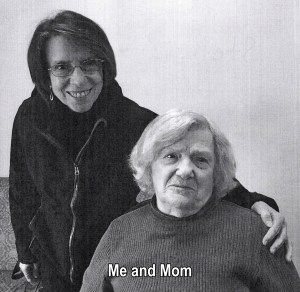
Even though Mom survived the bullets, the bombs, and the land mines that quaked the earth under her juvenile feet to live to be 92 years old, she never escaped the impact the war had on her life. Only when she read the Bible did she find peace.
Mom’s memory eventually faded with little resistance, but her voice struggled to keep its Neapolitan flame when she’d recall, “I was in the big-uh war-the second war!”
Enter your email address below to receive new blogs in your inbox.
PLEASE SHARE
 5 SECOND SMILES :)