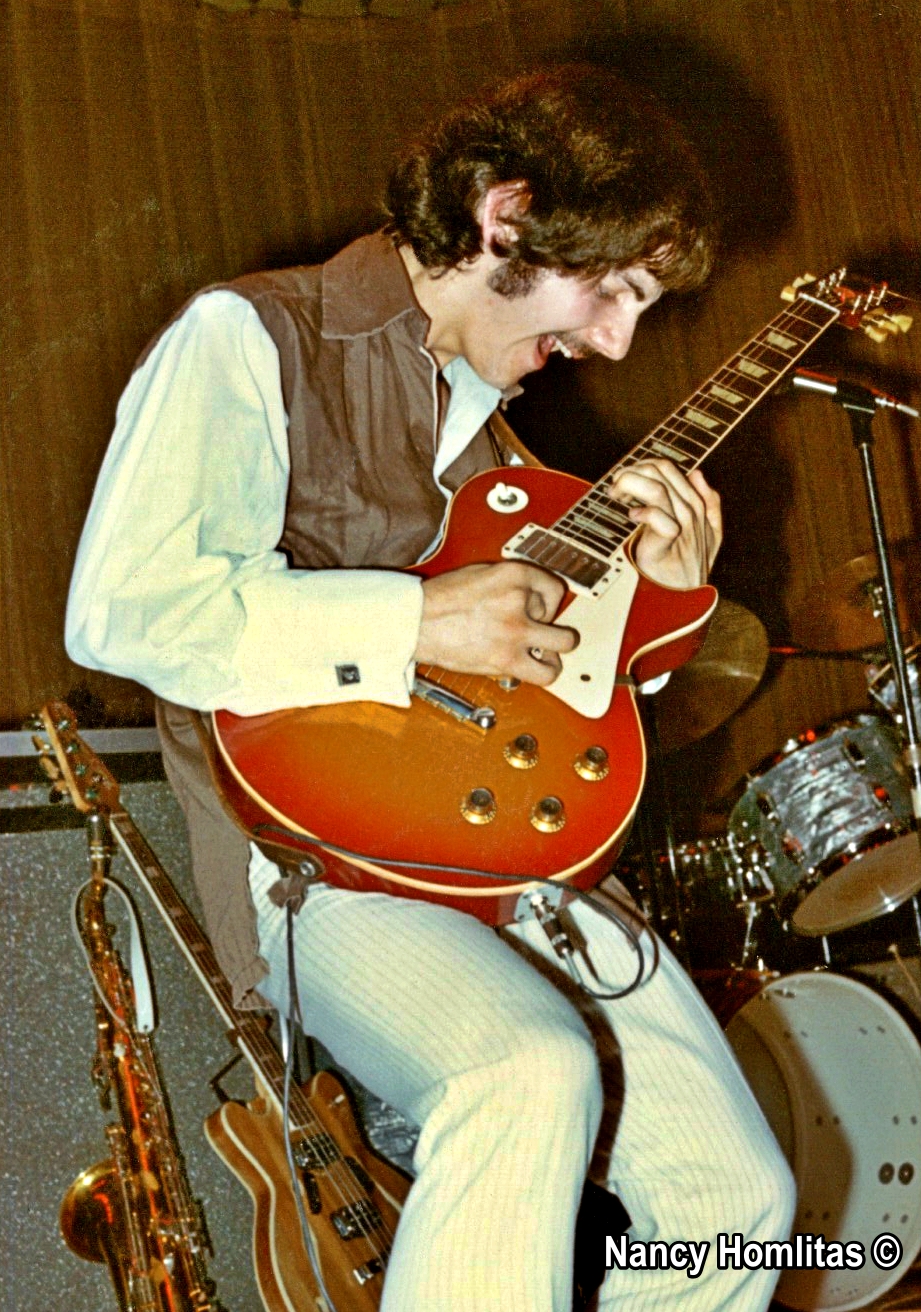
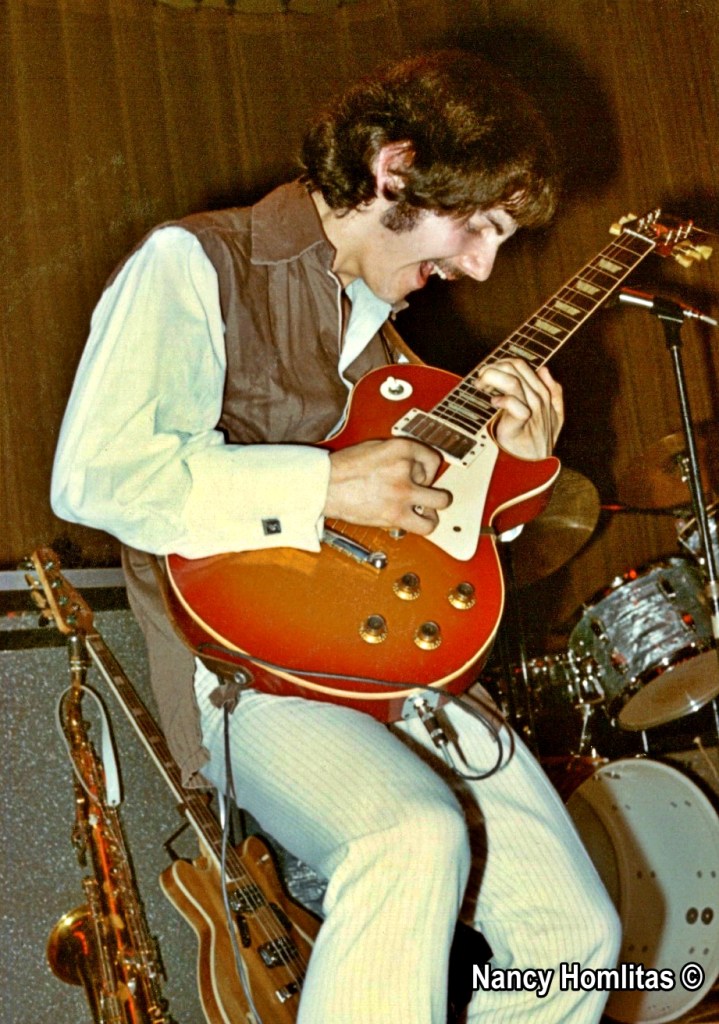
Back in the 1960s, my friends and I were Beatlemaniacs. We were lovesick over four British blokes who made us act like lunatics when they sang. During this time of hopeless infatuation, we attended a teen dance at Packard Music Hall in Warren, Ohio. Glass Harp was the band playing.
Our jaws dropped.
Their lead guitarist, Phil Keaggy, resembled The Beatles’ Paul McCartney! He was belting out a rocking version of Eleanor Rigby. Euphoric, we danced The Skate by sliding in frenzied zigzags across the floor. Sweat dripped off my hair like water from a janitor’s mop making my cheap perfume waft into a toxic cloud.
Smelling like the fragrance shelf in a thrift store, I approached Phil and asked, “Do you mind if I take your picture?” Looking a little sheepish-or just struggling to breathe-he agreed.
So, I took out my nifty little Instamatic camera with a flash cube. I snapped the profile image below in January 1969 of seventeen-year-old Phil Keaggy. I later mailed it to Tiger Beat Magazine noting his resemblance to Paul McCartney. An editor responded indicating the publication may check him out.

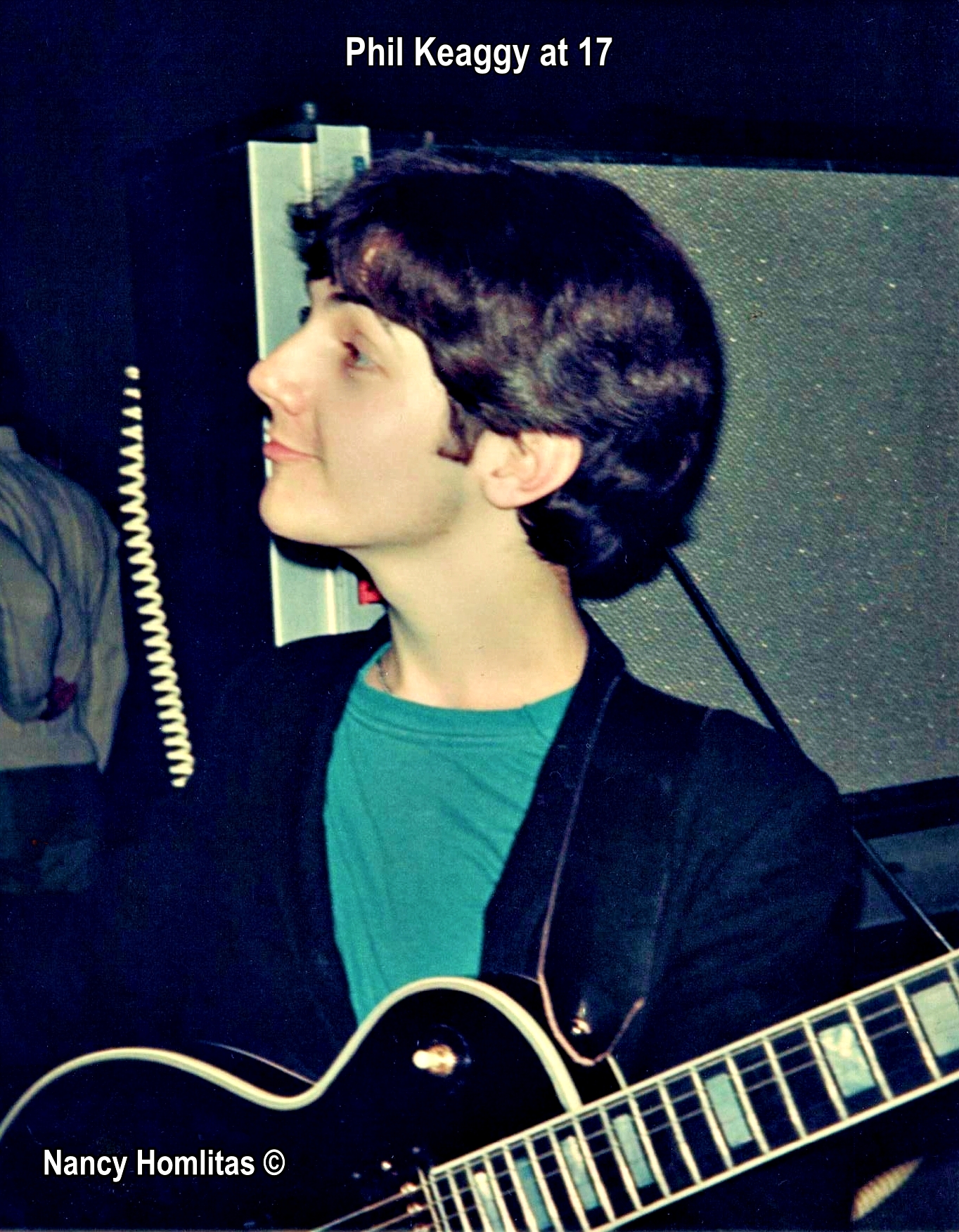
Little did we know Phil would ultimately be recognized as a phenomenal guitarist and an extraordinary performer in the Christian genre and mainstream markets. He’d release 55 albums, receive seven GMA (Gospel Music Association) Dove Awards for Instrumental Album of the Year, and be nominated twice for a Grammy Award for Best Rock Gospel Album.
But as giggly teenage girls, we just saw Phil as adorable. We joked about the similarities and differences between him and Paul McCartney. As we watched Phil pluck his guitar strings, I pointed out, “Look-he’s missing his right middle finger.”
My Christian friend shot back, “Oh, he is not. That’s not funny, Nancy.”
She knew the Bible, unlike adolescent me. In Ephesians 5:4, the Apostle Paul does say, “Let there be no filthiness nor foolish talk nor crude joking, which are out of place….” But I wasn’t being crude. We later learned Phil lost most of his middle digit while using a water pump as a child.
We still gushed over The Beatles but became loyal followers of Glass Harp: Phil on lead guitar, John Sferra on drums and guitar, and eventually Daniel Pecchio on bass guitar and flute. Initially, getting to their gigs involved mooching rides. Once, I asked my confirmation Godmother, five years my senior, to drive us. She loved The Beatles, so I knew she’d love Glass Harp. After all, they even sounded like The Fab Four.
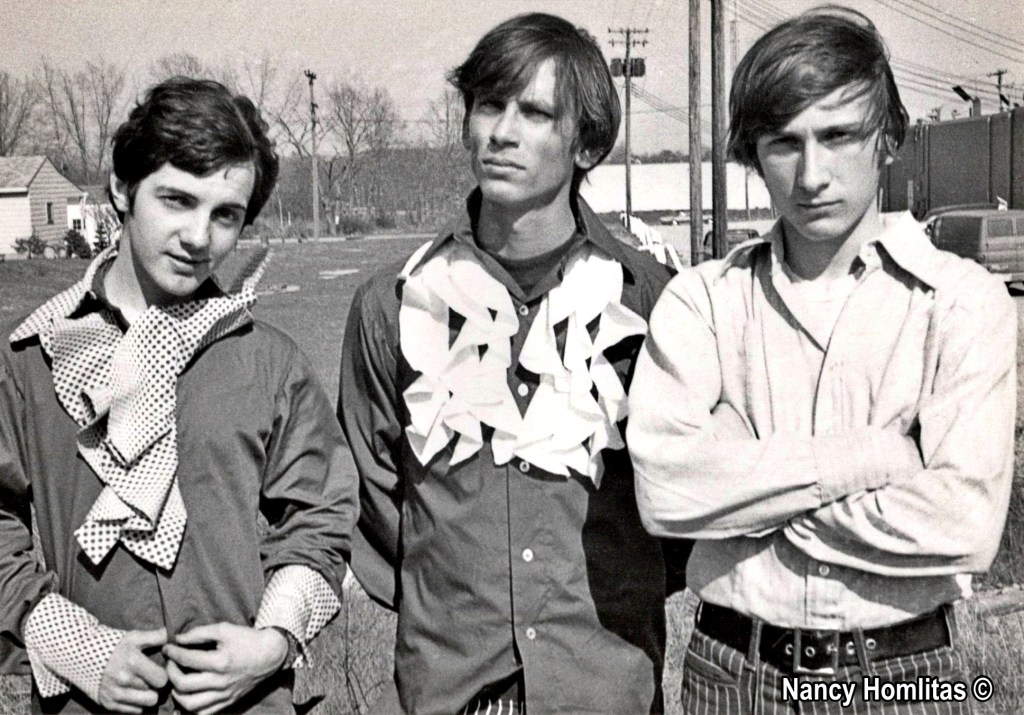
It happened to be Sunday and I’d skipped church. Disappointed, she told me, “Nancy, I can’t take you if you didn’t go to church.” And she reminded me that “Jesus is before all things” (from Colossians 1:17). My flaming red face of shame nearly incinerated my eyebrows.
So, I didn’t go to that dance. But a clerk in the office where I worked after school took my friends and me to several others. I introduced her to Glass Harp’s manager at the time, Geoffrey Jones, and she got sweet on him. They’d stand together and chat while Glass Harp performed.
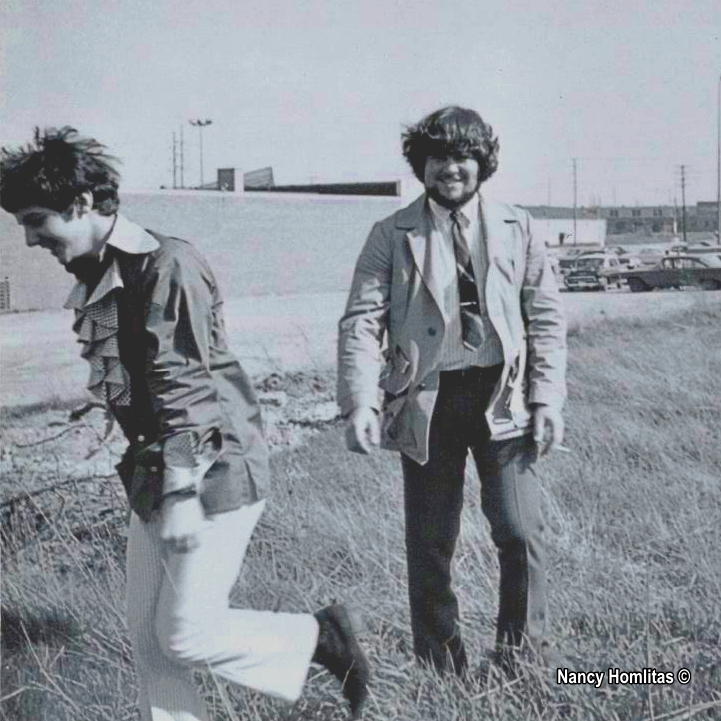
One thing led to another, and my friends and I started Glass Harp’s first fan club. Plundering ideas from The Beatles’ fan club made it easy. We recruited members at Glass Harp gigs, collected fees, and mailed membership packets. And I bought a 35mm camera.


The above letter is from Jones, who began by thanking me for the Tiger Beat correspondence. He also asked for help to promote Glass Harp’s first single “Where Did My World Come From?” Every morning before school, we bombarded the local radio station with calls to play it. As you can see from the WNIO music guide below, we pestered the local disc jockey into compliance.


Phil wrote the lyrics to “Where Did My World Come From?” on one side of notebook paper for me (above right). On the flip side, he wrote the lyrics to the B-side of the single, “She Told Me.” Copies were made and mailed to fan club members. Phil hadn’t yet developed the full potential of his voice on their debut record, but he’d already mastered the guitar.
But then tragedy struck. On Valentine’s Day in 1970, Phil’s mother was in a head-on car collision. Marguerite Keaggy, a Godly woman, died a week later. Her funeral mass filled the church with acquaintances, relatives, and friends of their large family. Phil, the ninth of ten siblings, has a younger sister named Geri. They share a deep connection and are kind to a fault.
At the time, Geri and I hung out together. After I’d scraped together $250 for a 1964 Chevy Nova, Geri and a friend or two (or three!) would pile into my rattletrap to go wherever Glass Harp played.
Once, when Geri spotted a hitchhiker, she morphed into Mother Teresa. Bouncing up and down on the front seat, she shouted, “Stop! Stop! Pick him up!”
So, I did, hoping she knew the young man. She didn’t. Back then, serial killers were lopping off limbs and filling roadside ditches with torsos. Fortunately, this friendly hippie didn’t have a sickle.
After a concert in Akron, Geri asked if the band could ride back to Youngstown with us. She said they didn’t want to wait for the roadies to pack their equipment. Daniel and Phil squeezed into the front. Geri, a friend, and John squeezed into the back.
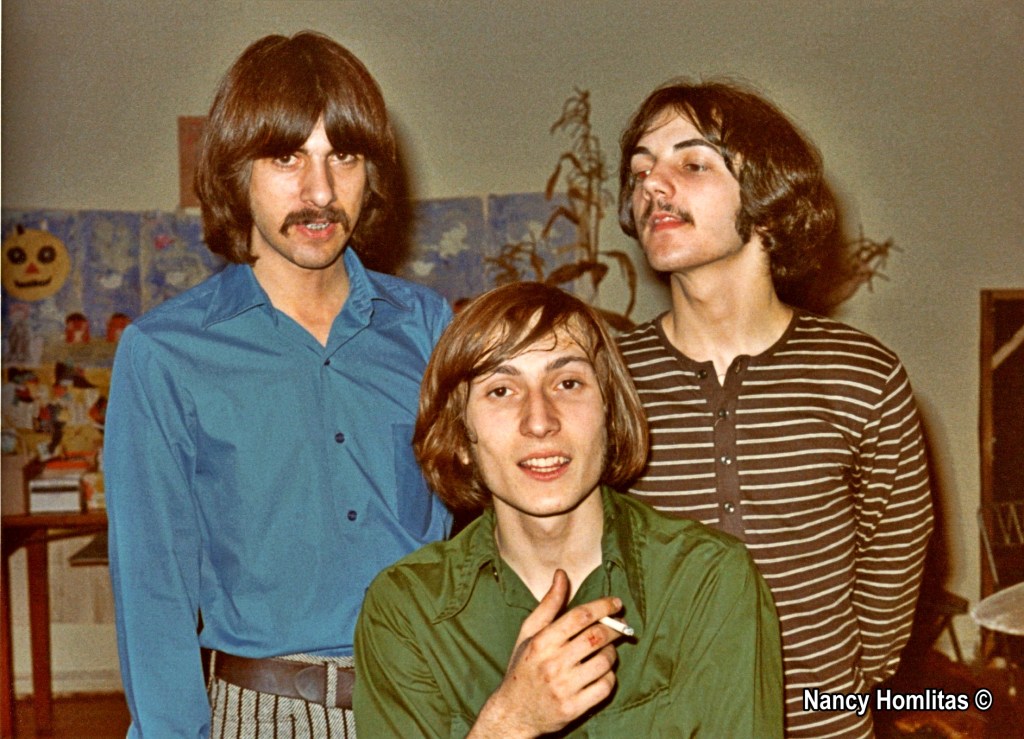
As I pulled out of the parking lot, a grinding noise prompted Daniel to tell me, “Press all the way down on the pedal when you shift so the clutch doesn’t get worse.”
While doing that, the column shifter had to be held in place so it wouldn’t jump gears. Each time the transmission engaged, our heads snapped back as if we were on a roller coaster gone rogue.
When I dropped off Phil and Geri at their house, Geri said, “It’s late. Just spend the night and drive home in the morning.” We crashed on the living room floor.
Bright and early, Phil’s dad marched his rambunctious grandchildren into the octagon-shaped living room. There were no corners, so with his finger wagging, he ordered, “You stand there and you stand there and you stand there.” His tall height surprised me since Phil is shorter in stature.
Phil, who’d grown a mustache like his idol Paul McCartney, showed me his new tape deck. I showed him my recently completed Beatles scrapbook. He said, “I’ll give you fifty bucks if you make me one.” My magazines were trashed, so I couldn’t.
He then told me about his oldest sister Mary Ellen (Kay) Keaggy. “She’s an actress. She’s the one who took baby Moses out of the basket in the movie The Ten Commandments.” Adding that, “Mary Ellen can speak in tongues.”
Phil shared how she guided him toward finding peace in Jesus following their mother’s death. He said her influence helped awaken his faith, leading him to accept Jesus Christ as his Lord and Savior. Phil’s music began to reflect his newfound spirituality, fulfilling his mother’s prayers for him to use his talent for good.
Glass Harp’s sound evolved from the Beatles’ genre to long improvisational instrumental pieces. Some songs they performed had incredible starts with no defined endings. They often closed their shows with Donovan’s “Season of the Witch,” a never-ending jam song that melted your brain.
As 1970 progressed, managers Chip Killinger and Bill Able succeeded Geoff Jones, who’d been instrumental in Glass Harp’s early success. The group began getting lucrative bookings and opening for well-known bands. They recorded their debut album, Glass Harp, and their popularity in Ohio soared.


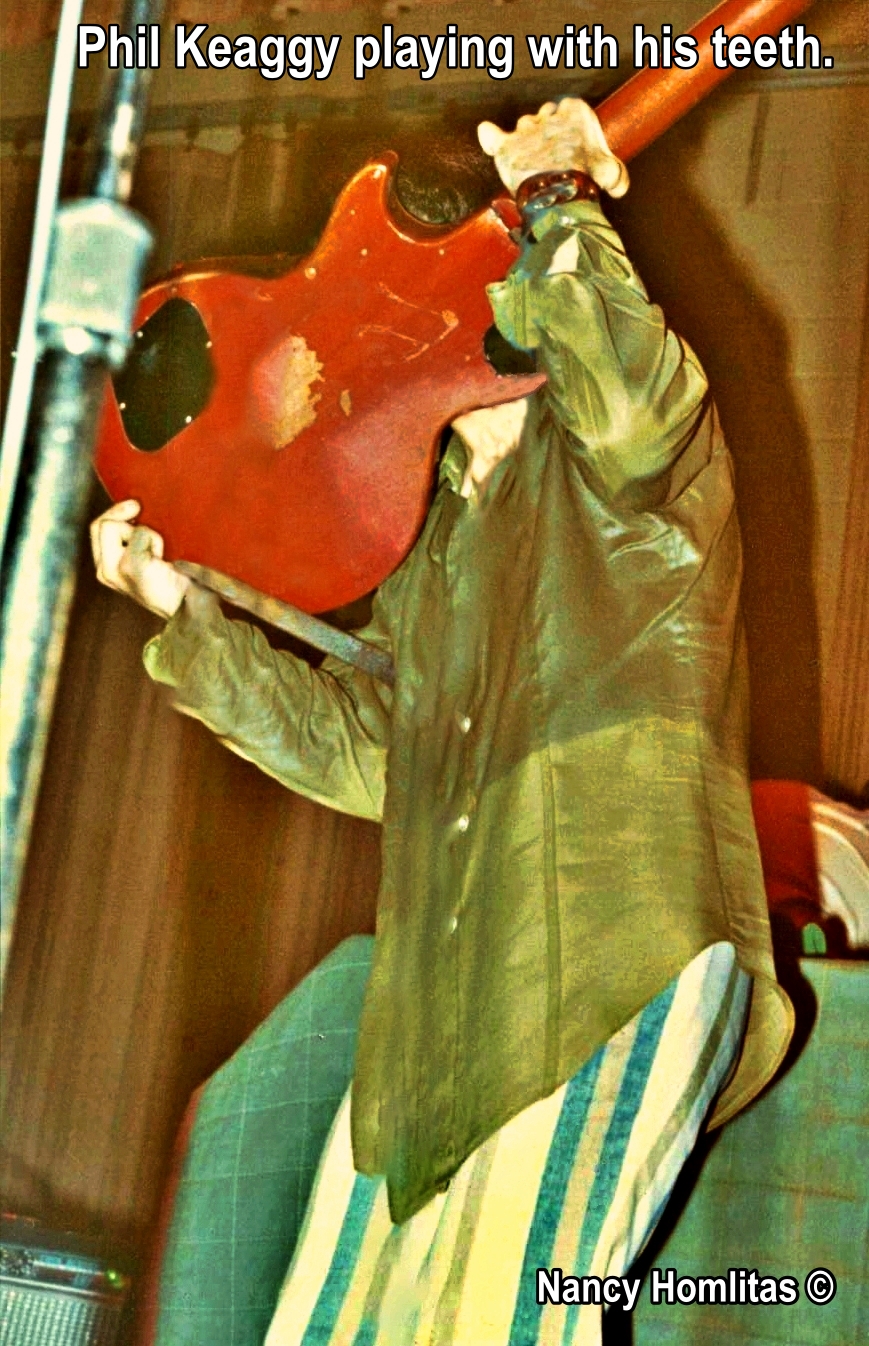
Over the next couple of years, Glass Harp released two more albums, Synergy and It Makes Me Glad. They even played at the renowned Carnegie Hall. I continued to follow them, but attended only local concerts, which became fewer and fewer. The Glass Harp Fan Club did a slow fade.
While still with Glass Harp, Phil composed and sang many Christian-themed songs. In 1972, filled with a longing to please God, Phil left Glass Harp. He pursued a solo career in Jesus Music, which evolved into Contemporary Christian music. Eventually, he earned global recognition as a songwriter and instrumentalist.
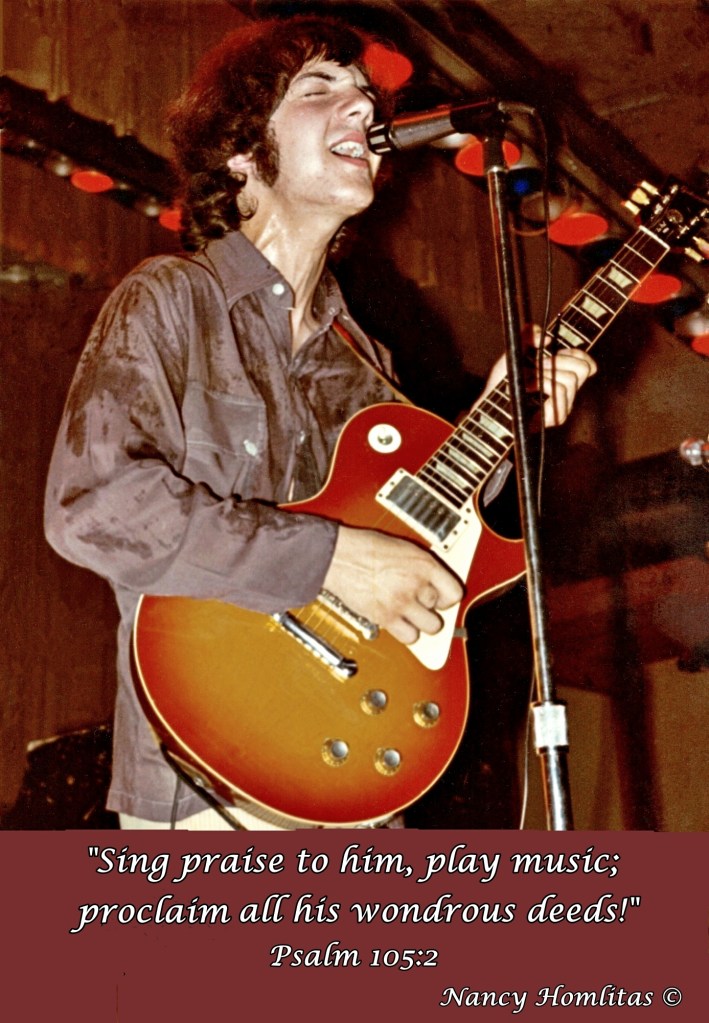
I last saw Phil perform with Dan and John at a sold-out reunion concert in October of 2000 at Powers Auditorium in Youngstown. Members of the Youngstown Symphony Orchestra, conducted by Isaiah Jackson, collaborated with Glass Harp.
When the trio took the stage, they ignited a whistling, stomping standing ovation. It reminded me of a Beatles’ concert I attended in 1966 at Cleveland’s Municipal Stadium. But Glass Harp’s followers didn’t scream, sob, swoon, faint, or wet their pants. They erupted in joyful praise for music that celebrated the Lord.
Phil, one of the most highly regarded guitarists in music today, doesn’t look as much like Paul McCartney anymore. But he’s still adorable.
Enter your email address below to receive new blog posts in your inbox
PLEASE SHARE
 5 SECOND SMILES :)